Interview with Debut Author, C. S. Wachter

Me: When did you first know you wanted to be a writer?

C.S. Wachter: During the summer of 2015 I began meeting with a couple people from my neighborhood who were interested in writing. We shared short pieces, no more than three pages. They were very encouraging. So … one day after we met, I went home, sat at my laptop, and started writing.

Me: Why did you choose to write Christian Fantasy?

C. S. Wachter: Ever since reading J. R. R. Tolkien’s “Lord of the Rings” in middle school, I’ve been drawn to fantasy that reflected the battle of light and dark, good, and evil. It doesn’t mean I can’t enjoy fantasy that doesn’t have Christian threads running through it; it just means, for me, those stories seem to lack something. Over the years, Christian Fantasy writers have enriched my faith. I decided that if I was going to write, I wanted to do the same for others. Much of what is out there today focuses on humans battling evil by themselves. Or, if they seek help, they turn to stronger demons. I wanted to tell a story where God is part of the tale and His help is given.

Me: Do you think you’ll ever add any other genres to your writing? If so, what are they and would you plan to publish them?

C. S. Wachter: Years ago, I read something C. S. Lewis said about fantasy reflecting reality but with enough distance that people could process things they would otherwise face with difficulty. This idea has proven true for me and because of that, I doubt I would ever write another genre. But, I have also learned never to say never. If I did write another genre though, it would probably be contemporary fiction, maybe with an edge to it.

Me: Where do you get your story ideas?

C. S. Wachter: My friend, Jan, says I have confetti in my brain. I don’t know if that’s true or not, but the ideas just fill my head, frequently in the middle of the night, sometimes when I’m walking. It could be something as common as a leaf flying by on the sidewalk that triggers a whole idea in my confetti brain. I usually jot my impressions or ideas down as a note in my phone for future use.

Me: Do you ever experience writer’s block? If so, what do you do to overcome it?

C. S. Wachter: There have been times when I couldn’t seem to move forward when writing a first draft. For me, that is a signal that something I just wrote isn’t right. I back up, analyze what I wrote prior to the block, and think through what I need to change to make the story flow again. I don’t know how it works for others, but for me, once I get past that change, I usually can move forward without a problem. I like to think the story already exists and I’m just the one discovering it and revealing it.

Me: On average, how many hours a day do you write?

C. S. Wachter: It varies, but I would say I usually get in at least three hours and sometimes as much as eight hours.

Me: How long does it take you to complete your first draft?

C. S. Wachter: The four books of “The Seven Words” series were written in twelve months. That averages one every three months. But … I have other books I started that I set aside while I continued editing “The Seven Words” books. Lander’s Story, (that title will change), started out as a short story (Leaving Wharton) which I wrote for family and friends for Christmas of 2016. After completing the short story, I decided I wanted to continue and used it to launch the book. Though Lander’s Story is almost half written, it has remained at that point for more than a year now. Once the editing, publishing, etc. is completed on “The Seven Words” and the sequel to “The Seven Words”, I look forward to plunging back into writing Lander’s Story. Having said that, though, Lander has been percolating in the back of my brain, so he hasn’t been forgotten.

Me: Are you part of a critique group? If so, do you find a critique group helpful and do you use the critique group while you are writing or after your first draft is finished?

C. S. Wachter: Yes, I do belong to a small critique group. Yes, it has been most helpful. I started writing less than three years ago and I have learned so much through my critique partners. They’ve helped me hone my writing in ways I would never have thought to do on my own. So far I’ve mostly shared drafts that have been somewhat polished because I didn’t even know about critique groups when I first started writing. Would I share a WIP before it is in the first-draft phase? I’m not sure.

Me: Have you ever gone to a writer’s conference? If so, what benefits do you think a writer’s conference has to offer?

C. S. Wachter: Writer’s conferences are not only great for learning about the craft from people who’ve done it, they can be great fun and a wonderful place to meet others in the various professions connected with publishing. Nothing beats networking face to face. I still stay in touch with friends I met at my first big conference in 2016.

Me: How many revisions/edits do you do before publishing?

C. S. Wachter: Many. As many as needed. For The Sorcerer’s Bane I probably worked through at least a dozen drafts before it even came close to a final edit. I hope future books won’t need so many drafts before final editing. It’s been a learning curve for this newbie author.

Me: Do you have a professional editor and do you think it is necessary for every writer to have one? Why or why not?

C. S. Wachter: Yes. I think it’s important because no matter how good your friends may be at picking out grammar errors or general typos, they don’t have the experience to do a professional-level edit. (Unless your friend happens to be an editor.) And, let’s face it, we can’t see our own errors. We need that set of eyes tuned to focusing on the problem areas to polish our work before it goes out into the marketplace to compete with others.

Me: Why did you choose to indie publish instead of publishing traditionally?

C. S. Wachter: The first reason: I wanted creative control of my work and was willing to put in the effort to start my own business to have that. The second reason: Time frame. I already wrote all four of “The Seven Words” series and I wanted the flexibility to release them in quick succession (one each quarter through 2018 and the sequel at the beginning of 2019). If I went traditional I’d have to wait for a publisher to decide to publish my first book, then wait approximately two years to have that first book published; and, most likely, wait another year between the subsequent book releases.

Me: Do you continue to study writing? If so, do you consider this important and why?

C. S. Wachter: Like with any craft, we writers need to continue to study and improve. However, I can get bogged down far too easily in learning about something rather than doing that something, so I limit my study. Conferences are great not only for connecting with others of like mind, but they are wonderful places to learn from those more experienced authors who are willing to share their knowledge. Connections I’ve made with others in the industry have made a huge difference in what I’ve learned.

Me: What are some of your favorite writing resources?

C. S. Wachter: The Emotion Thesaurus by Angela Ackerman and Becca Puglisi and The Art of War for Writers by James Scott Bell.

Me: What do you think is the hardest part about writing, publishing, and marketing?

C. S. Wachter: For me it’s definitely the marketing. I’m not a naturally outgoing person. I’m most happy sitting at my laptop quietly writing (well, not totally quiet … I happen to love heavy Christian rock). I learned so much through indie publishing and don’t have any problems continuing with that. But the marketing … goose bumps and a shiver up my spine. Social media is hard for me. I don’t blog, twitter, or do newsletters. I guess at some point I’ll need to learn, but for now, I’m slowly feeling my way forward in marketing.

Me: What advice would you give to new and/or young writers?

C. S. Wachter: Just do it! Don’t let your fears that it’s not perfect get in your way. The second piece of advice comes from James Scott Bell: ‘Write fast and furious; edit slow and careful’.
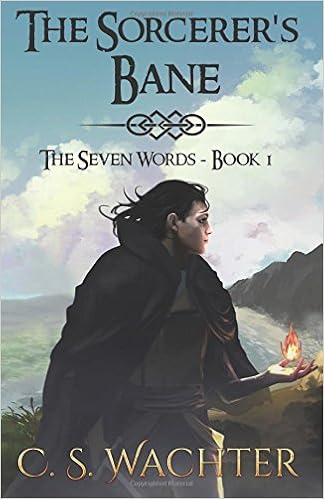
 

The Sorcerer’s Bane by C.S. Wachter

The Sorcerer’s Bane by C. S. Wachter, a debut novel by a debut writer. I have to say that this is one of the few fantasy books I have read since reading the Narnia series by C. S. Lewis and the Lord of the Rings series by J. R. R. Tolkien. I loved the Narnia series, but didn’t really enjoy much of the Lord of the Rings, except for a some of the characters. You see, as a reader, I need an interesting plot that keeps things moving, but more importantly to me are the characters — being able to sympathize or empathize with them, feeling their feelings. I need to care about and identify with the characters, and I need to want to cheer them on and need to know how things will turn out for them.

I was introduced to the fantasy genre later in life — in other words, I was already out of my twenties, and I have always been an avid reader of any genre of story that includes some romance as part of the main story line, so fantasy has never really been my go-to read.

However, I have come to have an appreciation for and understanding of good fantasy books, especially Christian Fantasy books because they have a true good versus evil story line that points to the true hope for a happy ending.

Well, imagine my surprise, when I read The Sorcerer’s Bane and found myself quickly entrenched in the worst kind of evil — the enslavement and abuse of a child. Yet, the child grabbed my attention from the start, and held my attention fast so that I was unable to put the book down, even when it made me cringe and flinch, and it disgusted me sometimes.

So, what was it that kept me reading as I fought past these feelings? It was the characters — the boy who had an incredible resolve for one so young, the teacher who desired to teach the boy more than just reading, writing, and arithmetic, the kind young lady who ministered to the boy’s injuries. Even some of the characters that were part of the evil the boy dealt with held my attention because I had a glimmer of something more than the evil they presented that made me hope they may change.

C. S. Wachter has a way of weaving a tale that drags her character through hell but that always exhibits a glimmer of hope and light for something better to come. Even at the end, the knowledge and hope of more to come whets my appetite for the next book in the series of “The Seven Words” by C. S. Wachter.

So, if you love a good tale of good versus evil, I recommend The Sorcerer’s Bane to you, but only if you are a young adult or adult, as some of the violence and situations in the book may be too upsetting to children.

If you have enjoyed my book review for The Sorcerer’s Bane by C. S. Wachter, be sure to stop by tomorrow for a special blog post, where you can read my interview with new author, C. S. Wachter.

An Acrostic Poem by Kelly F. Barr

St. Joseph
by Kelly F. Barr

Sun beating on his back.
Trail is dry and dusty.

Johnny rides for the Pony Express.
Open prairie stretches before him.
Seneca waits his arrival.
Erin fills his mind–her eyes, her lips, her spirit.
Problems need to be overcome.
Hope is something he clings to.

LCW Super Saturday is Coming!

If you are a writer, or want to be a writer, and you live in or near, or can travel to Lancaster County, PA, I highly recommend this one-day writers’ conference, and this year’s promises to be the best yet, just look at the line-up:

LCW SUPER SATURDAY 2018  April 7, 2018  (8:30 a.m. – 4:30 p.m.)

WORKSHOP DESCRIPTIONS/FACULTY BIOS

MARLENE BAGNULL— Conference speaker and director Greater Philly and
Colorado Christian Writers Conference; author, Write His Answer; editor and
publisher, Ampelos Press

WORKSHOP: Hook ‘em from the Get-go and Hold ‘em to the End. With
over 1,000 sales to Christian periodicals, Marlene Bagnull has developed a
checklist to help you create, rewrite, and edit your articles so that you can be
certain you’ll hook ’em from the get-go and hold ’em to the end.

DONNA BRENNAN—magazine and technical writer with
numerous short stories, interviews, and nonfiction articles published online and
in print magazines including Thriving Family, Encounter, Splickity, and
Christian Fiction Online Magazine. A member of American Christian Fiction
Writers (ACFW) and the Greater Lehigh Valley Writers Group (GLVWG),
Donna has served in various capacities on the GLVWG board, including several
terms as Conference Chair.

WORKSHOP: Make It Personal: Mastering Deep Point of View: What is
meant by “deep point of view” and how does it affect your writing or your
reader? Can you only attain deep point of view in first person writing, or is it
possible in third person? In this interactive session, we’ll discuss what is and
isn’t deep point of view and study examples. And then we’ll all try our hand at improving several
samples of writing by going deeper with the point of view.

PIERRE EADE—pastor, conference speaker, and author of Born to
Grow and Our Good Father. Pierre’s personal mission is to inspire,
educate and empower people to grow. Pierre enjoys writing on the
topic of spiritual growth on his website and blog. In both his writing
and speaking, Pierre is a gifted communicator who uses the power of
personal story and humor to bring the Bible to life.

WORKSHOP: The Power of Story: Using Personal Anecdote and
Humor to Write Compelling Non-Fiction. “Then I witnessed the most
amazing thing happen with my dog!” Capturing your audience’s
attention. Bringing a smile to their face. Landing your message with a
powerful punch. All of this is possible through the power of story. In
this workshop, you will not only learn the why and how of creative storytelling but get a chance
to put it into action. And maybe hear the astonishing true story of how Pierre Eade’s dog was
healed through the power of—peanut butter?!

LYNN EIB—award-winning newspaper reporter-turned-award-winning
author with six titles published by Tyndale House, including bestselling
When God & Cancer Meet and Peace in the Face of Cancer, 2017 Golden
Scroll Nonfiction Book of the Year. Her journalism career includes awardwinning
reporting stints on The Cleveland Plain Dealer and The York Daily
Record, as well as many published articles in both secular and religious
magazines. As a longtime cancer survivor and patient advocate, she has
provided emotional and spiritual support to tens of thousands of cancer
patients and caregivers around the world. Lynn is also founder of The
Cancer Prayer Support Group, the country’s oldest such faith-based group.

WORKSHOP: Faith-Based Writing Both Believers and Seekers Will
Read. Do you want your writing to not only encourage believers, but also
draw those seeking God closer to true faith? If so, you need to write so
those readers will read and can understand your message. Learn to think
like those readers think, appropriately choose a title/book cover, avoid
Christian terminology, and use Scripture powerfully, yet wisely. If you have a heart for your
work to be an evangelistic tool, you will want to attend this workshop.

GAYLE ROPER–Has been in love with story as long as she can remember, whether reading or writing one. She has authored more than fifty books and won numerous awards including RITA Award, Carol Award, and Golden Scroll. Romantic Times Book Report has given her the Lifetime Achievement Award. Christian Writers’ Conferences including Mount Hermon CWC, Florida CWC, and Greater Philadelphia CWC have cited her contributions to the training of writers. She lives in Southeastern PA and can be contacted at gayle@gayleroper.com; http://www.gayleroper.com.

WORKSHOP:  But I Love Her! Making Your Characters Live. What makes a character on paper more real than the person sitting next to you? Characters your reader cares for and knows are the keys to successful fiction, whether plot driven or character driven. We will discuss personalities, markers, layering, and consistency.

WORKSHOP:  Before You Write–Theology and Philosophy of Christian Fiction. You can’t wait to write your story. You have a great plot and wonderful characters. But who are you writing for? What’s your world view? What about pattern and principle? Verities vs. distinctives? You should know so you can write from a solid base.

LOREE LOUGH— Bestselling author of more than a hundred books
that have earned countless industry and Readers’ Choice awards,
including fiction and non-fiction for kids and adults, with nearly seven
million copies in circulation and seven books optioned for movies. Loree
also has 68 short stories, and 2500+ articles in print. An oft-invited guest
of writers’ organizations, colleges and universities, corporate and
government agencies in the U.S. and abroad, Loree loves sharing
learned-the-hard-way lessons about the craft and the industry.

WORKSHOP: Don’t Waste That Research: Turning Your Extra Data into Writing Income.
Whether writing fiction or nonfiction, writers spend countless hours reading and interviewing in preparation for a well-researched article or novel. In this fun and practical workshop, Loree will show you, step by step, how to turn that research into extra dollars. Now, doesn’t that make “cents”’!

SHAWN SMUCKER— Co-writer of many nonfiction titles and author
of YA speculative novels The Edge of Over There and The Day the
Angels Fell, 2018 winner of Christianity Today’s Book Award in
Children and Youth category. He lives in Lancaster, PA, with his wife
and six children.

WORKSHOP: Writing Out of This World: A Practical Guide to
Speculative Fiction from Concept to Publication. Are you thinking of
diving into the emerging genre of speculative fiction? Does your new
book idea involve elements of supernatural realism? Join Shawn
Smucker, recipient of Christianity Today’s 2018 Book Award for his
YA speculative novel The Day the Angels Fell, as he explores the
process of moving your “out of this world” story idea from concept to
successful publication.

JEANETTE WINDLE—president, Lancaster Christian Writers,
investigative journalist, freelance editor, award-winning author
of 21 fiction and non-fiction titles, including Forgiven, 2016
Christian Retailing Best Award and ECPA Christian Book
Award finalist, and All Saints, also a Sony film.

WORKSHOP: Life’s Good, Bad and Ugly: Making Fiction
Ring True. Writers can only breathe reality into their words if
they know intimately of what they are writing. From an author
who has been there and done that, learn how to use the good,
bad, and ugly of your life experience to give your fiction the
touch that will grab editors’ attention and make your story ring
true to readers.

Now hurry over to: https://drive.google.com/file/d/1JMRwT9RXQ46IzkN9v3GNEPhWnwgID9fT/view

and register! I hope to see you there!

An Erasure Poem and Sneak Peek

I created this erasure poem from a paragraph in my work in progress.


By Kelly F. Barr

A burst of warm air
And the scent of horses.
She stepped into the parlor.
Checkers —
Read; many kings.
Who was winning?
Wait for the outcome.
Just a few more moves
And Johnny was the victor!
 

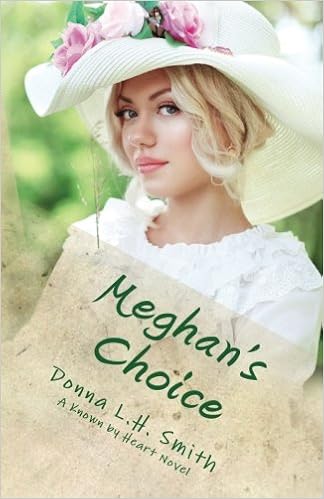
Meghan’s Choice by Donna L.H. Smith

This is a new book by a new author, Meghan’s Choice by Donna L. H. Smith, the first in Ms. Smith’s “A Known by Heart” series. After being rejected by a man she thought she loved, her father demands that she work for a year. So Meghan determines to do just that–anywhere but St. Louis.

Soon she moves to New Boston, Kansas to tutor eight children in a wild Kansas railroad town. It doesn’t take long for her to experience the danger in this town. In addition, she quickly catches the eye of a dark, handsome cowboy, as well as an attractive doctor. Which one will win her heart?

In all honesty, I have to say that Meghan is not my kind of main character, (this has nothing to do with the author or the writing, just my personal taste). Therefore it took me a few chapters to really start to care about what happened to her. However, I did take quite an interest in one of the two men who were vying for her attention, and the other intrigued me–that was enough to keep me reading. Of course, I am also partial to stories set in the historic west.

I found this to be a sweet story with a couple of disturbing surprises. Throughout the book, I met many interesting characters and learned some interesting Kansas history. I also found a couple of characters to root for.

Meghan’s Choice is a delightful debut novel from a new author. I look forward to following Donna L. H. Smith on her writing journey.

Cookies (A Poem)

Cookies
by Kelly F. Barr

Cookies are a favorite treat;
An easy take-along snack
That’s sweet and fun to eat;
Enjoyable by the handful, bagful, or stack.

Some like their cookies crisp and crunchy;
Some like their cookies soft to chew.
They satisfy a case of the munchies.
Most can’t resist eating “just a few”.

What kind of cookie do you like best–
Oatmeal raisin, molasses, or chocolate chip?
Finding the perfect cookie can be quite a quest;
But when you find it, you’ll want to flip.