Guest Post by Jodie Wolfe

Finding Peace This Holiday Season

By Jodie Wolfe

I don’t know about you, but sometimes I struggle with finding peace. Especially when life is hectic, or I’m thrown by unexpected sorrow and pain, or I’m feeling under the weather. Any number of things can get me off-kilter and trying to find peace in the midst of whatever situation I’m facing seems difficult. I have to remind myself to go back to the source, my Prince of Peace.

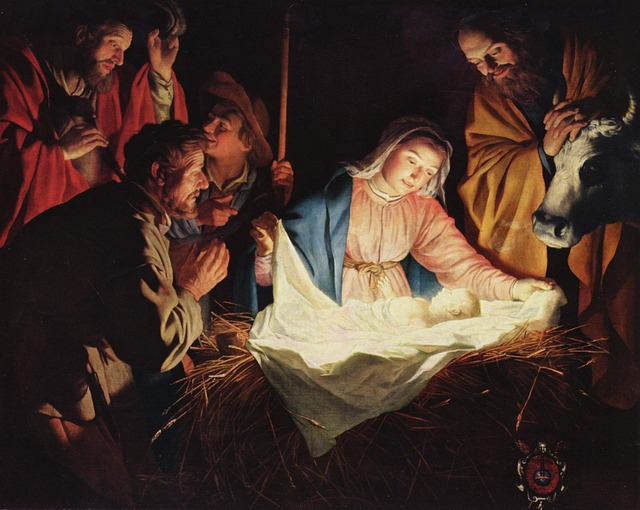
For to us a child is born,to us a son is given,and the government will be on his shoulders.And he will be calledWonderful Counselor, Mighty God,Everlasting Father, Prince of Peace.

Isaiah 9:6 (NIV)

I love this foretelling of Jesus’ birth and who He is. Somehow it helps to put whatever I’m struggling with into perspective. No matter what I’m facing, I’m reminded that I have a Wonderful Counselor, Mighty God, Everlasting Father, and Prince of Peace who cares about every detail of my life. What a comfort.

Then there’s the promise Jesus gave before His death on the cross and resurrection.

Peace I leave with you; my peace I give you. I do not give to you as the world gives. Do not let your hearts be troubled and do not be afraid. John 14:27 (NIV)

When you get worn out or frazzled this holiday season, take a few moments and find all the verses in the Bible that talk about the true peace which can only be found in Jesus Christ. Perhaps after reading a few, your heart will lighten knowing you can give all your burdens to your Heavenly Father who knows you better than anyone.

May you find peace this Christmas.

Bio

Jodie Wolfe creates novels where hope and quirky meet. She is a member of American Christian Fiction Writers (ACFW), and Faith, Hope, & Love Christian Writers (FHLCW). She’s been a semi-finalist and finalist in various writing contests. A former columnist for Home School Enrichment magazine, her articles can be found online at: Crosswalk, Christian Devotions, and Heirloom Audio. When not writing she enjoys spending time with her husband in Pennsylvania, reading, walking, and being a Grammie. Learn more at www.jodiewolfe.com.

Social Media Links

Website: https://www.jodiewolfe.com

Facebook: https://www.facebook.com/Jodie-Wolfe-553400191384913

BookBub: https://www.bookbub.com/profile/jodie-wolfe

Pinterest: https://www.pinterest.com/JodieAWolfe

Goodreads: https://www.goodreads.com/author/show/15220520.Jodie_Wolfe

Amazon Author Page: https://www.amazon.com/Jodie-Wolfe/e/B01EAWOHXO/ref=dp_byline_cont_ebooks_1

MeWe: https://mewe.com/jodiewolfe

LinkedIn: https://www.linkedin.com/in/jodie-wolfe-3955b2bb/

Blurb

Enoch Valentine has given up finding peace for his past mistakes. He throws everything he has into being the new part-time deputy in Burrton Springs, Kansas while maintaining the foreman position at a local horse ranch. But when trouble stirs on the ranch, he questions whether he’s the right man for either job.

Peace has been elusive for most of Gertrude Miller’s life, especially under the oppressiveness of an overbearing mother. She takes matters into her own hands and sends for a potential husband, while also opening her own dress shop. Gertrude hopes to build a future where she’ll find peace and happiness.

Will either of them ever be able to find peace?

What’s So Great About Self-Publishing? Guest Post by Jeannette DiLouie

Editor’s Note: Today’s post is by guest blogger and author/editor, Jeannette DiLouie.  Jeannette is an independent thinker, author of ten books, currently, in genres of Historical Christian Fiction, Fantasy, Historical Fiction, and Political Thriller. She is an avid reader and book collector. Check out her blog and website at https://www.innovativeediting.com/blog/

What’s So Great About Self-Publishing?

I went the self-publishing route, and I don’t regret it one bit.

This particular adventure began back in 2013, when I gave up on getting a Big 5 contract and decided to take authorship into my own hands. Since then, I’ve published 10 books through Amazon’s CreateSpace, and I plan on doing the same with another two novels this year.

Additionally, as a book coach, I’ve helped other writers take the same journey. It’s an authorial choice I’m willing to stand by, both personally and professionally.

Why do I think it’s such a good idea though? Let me count the ways…

  1. You have total independence throughout the writing process.
  2. You have total independence throughout the editing process.
  3. You have total independence throughout the designing process.

Whatever publishing step you’re at, you’re free to run your business as you see fit. And that doesn’t always happen with traditional presses, as I’ve seen one too many times.

One of the first books I read this year was an utterly phenomenal young adult fantasy novel put out by a Big 5 publisher. The plot was striking, the characters were stellar and the setting was 100% believable. I devoured that book and bought up the second in the series just as soon as I could justify it.

But its sequel wasn’t nearly as good. There were too many new subplots thrown in, too many new character perspectives added, and the setting expanded into something far more complicated.

Book 3 was even worse, to the point where I won’t even bother buying Book 4.

Since the author can obviously write and write well, it begs the question of what in the world happened after that debut novel. Yet I truly believe her deteriorating story line is the publisher’s fault. It felt like she was pressured to just get something out on the market after her initial hit, with truly disconcerting results.

As a self-published author though, that’s not a problem I’ve ever had to deal with.

I also don’t have to worry about a rushed editing job, while many book presses – particularly the smaller ones – don’t seem to care about quality control. Once again, they’re interested in getting a book out to market. Toot sweet.

People complain about self-published novels all the time, and I understand why. Too many of them are poorly edited, to say the least. But my counter argument is that I see the same thing on the professional end of the spectrum.

Missing words, scattered sentences, dangling plot points: You’ll find all of those and worse.

Self-published authors, however, get to choose their own editors. While this does cost me money, I don’t care if it means I can actually be proud of the books I put out there.

Then there’s the issue of my front cover designs, which I put together myself. Did you know that authors are sometimes told to change their stories in order to fit pre-selected pictures? They’ve had to alter character details or rework plot points just to suit their publishers’ dictatorial decisions.

Self-publishing, on the other hand, allows a creative liberty that, in my opinion, can’t be beat. I’ve designed each and every one of my front covers by using Shutterstock, Adobe Photoshop and Adobe Illustrator; and I adore nine of them.

As for that 10th? Well, they say you can’t have everything in life and I guess it’s true.

None of this is meant to trash talk everything about traditional publishing. There are plenty of books by small presses and the Big 5 that are well-written, well-edited and well-designed.

Plus, authors who choose to unfurl their full individuality also have to handle their own marketing. And as I always tell the writers I coach, that can be a very tough job to fill.

But I still believe that’s a fair trade-off for the certainty that someone else won’t try to take over my story. My authorial independence is something I guard fiercely, so unless some other company can offer me realistic deadlines, thorough edits and a say in my cover art, I’ll stick with self-publishing.

That’s just the way I like it.


Continue reading

Guest Post: The Drama of Writing YA

I’m taking a break from poetry today to bring you a special guest post by my good friend, Laura L. Zimmerman.

The Drama of Writing YA

Long after I left my “young adult” years, I continued to read the books out of sheer enjoyment for the genre. I’d slip through the doors of Barnes and Noble, duck my head, and sneak to the back of the store where all the newly released YA novels were displayed. I knew I wasn’t the only adult who enjoyed the genre, but somehow, standing between groups of thirteen-year-old girls felt a bit intimidating. Still that didn’t stop me from enjoying a good read.

Since then, there have been times when I’ve read a popular YA novel only to think, ‘Wait. That’s not realistic!’ or ‘Whoa. Serious mood swings!’ So it’s no surprise that as I began to seriously write YA, I’d aim to get ‘inside’ a teenagers head but would strive to think of a more mature response. Something I would like to read.

Except, I was completely wrong.

I know this first hand because an actual teenager who read my actual work called me out on it. Big ouch.

Months prior I’d given this fourteen-year-old family friend one of my YA manuscripts. She enjoys writing, too, so I felt confident she’d give me a balanced review of my work.

But when I asked for her response, it wasn’t what I expected. 

It was good, she said.

Oh.

Okay, she hadn’t said it was boring, or confusing, or a plethora of other nightmarish things that a writer never wants to hear. But ‘It was good’ wasn’t hitting it out of the ballpark, either. I asked if she could sum up what stopped it from being great.

Her response? Not enough drama.

My YA novel didn’t have enough drama in it. Oops.

Of course, I had to defend myself. (Right?) I explained that I was tired of reading YA novels with love triangles, or where the main character is wish-washy with all of his/her decisions. I wanted to speak to a more mature audienceone who didn’t want to play high school games.

Yeah, but a teenager doesn’t want to read that,” she said. “High school has drama in it. We’re teenagers. It’s what we do. A teen wants to read what they see every day. Not how they should act.” 

Oh. Right. Because they’re…teenagers.

And then it hit me: There is a basic formula for what makes a YA novel because it works. It has worked in the past. It works now. It will likely continue to work for as long as teenagers read YA. 

So, I went back and added a bit more theatrics to the story. A love triangle, a couple of lies, a few misconceptions between characters. Did any of it have anything to do with the storyline? Not really. 

But a little bit of drama goes a long way. 

A few years have passed since then, but each time I read a YA novel with a dramatic twist, I smile. That’s just how a teenager would act, after all. And that’s a good thing. For YA novels, anyway.

You can find out more about Laura at her website: www.lauralzimmerman.com, on Twitter @lauralzimm and Facebook.

Bio:

Laura L. Zimmerman resides in Phoenix, AZ and is a homeschooling mom to three beautiful daughters. She is thankful for a supportive husband, who is always quick to encourage her love of singing, reading, and drinking coffee. Laura enjoys writing young adult and middle grade fantasy fiction and hopes to encourage children toward a relationship in Christ through her work. Laura is represented by Cyle Young through Hartline Literary Agency.

lauralzimmermanpic-1