My First Christian Writers’ Conference

This past Saturday I attended the Lancaster Christian Writers’ 2014 Super Saturday writers’ conference.  It was the first time I have ever attended a writers’ conference, and I absolutely loved it!  I attended some great, educational workshops, met some wonderful Christian authors and even had a 15-minute one-on-one consultation with an author!

I received such great advice and writing how-to’s and brought home a LOT of books, most of which I was blessed to have signed by the authors!  I look forward to attending next year’s conference!  I am also considering attending a nearby Writers’ luncheon and workshop in October.  What a boost — it has me very excited to get into my writing again, and now I believe I have a direction!

Suzanne Kuhn, better known as Suzy Q (http://suzyq4u.com/) gave a presentation on social media.  She focused mostly on Facebook and Twitter.  I was already comfortable with Facebook, but she certainly cleared up Twitter for me and helped realize how helpful it can be, and I now know what a hashtag is and what it’s purpose is.  Do you?

More to come on this great event in future posts.  Stay tuned!


Did You Know that Your Characters are Important in Determining Setting?

At the last Writers’ Group meeting, the author who writes under the names of “Shelly Bates” and “Shelley Adina” taught: People interact with their settings.  Therefore knowing your characters helps to determine their “world”/setting.   You should ask yourself: “What do I need to support my character’s growth?”  The culture of your location impacts sports, social life, what defines “in” and “out”.   You need to know about your character’s home because home reveals something about him/her as well as a lack in him/her and his/her society.  Otherwise, there’s no reason to leave. You need to determine your “Adventure World”:  Where does the story happen?   Setting can reflect internal qualities of the character.  Setting can reflect change in the character.  Setting can foreshadow change. Setting can create the challenge to change the character. Setting and interactions with it are filtered through the lenses of the character’s senses and knowledge. Your character influences your readers’ perception.  Details are filtered through the character’s senses and experiences.  This gives your readers the same sensations and experiences.  Add details as the character notices them. “The fantastic becomes normal when your character takes it for granted.” Use setting to highlight conflict, secondary characters, dialog.  Setting is one way to establish mood.  You can use weather, objects, light or shadows or darkness, and space. One great idea she mentioned, especially if you want to use a real place or simply model a made up place after a real place, it can be very helpful to have a photo of the place to refer to as you write.

What I Need to Work On

Saturday, I attended my Writers’ Group.  We had another author as a guest speaker.  She writes Amish fiction as well as something called “Steam Punk” fiction.  I had never heard of Steam Punk fiction before but she even came dressed in Steam Punk apparel because upon leaving our Writers’ Group, she had a book signing for her Steam Punk fiction at a nearby historical railroad.

Her Amish fiction books are written under the name of Adina Senft and her Steam Punk books are written under the name of Shelley Adina.  She talked about several of her books and I was quite intrigued by the ones labeled as “Steam Punk” fiction.  I was disappointed that she didn’t have any books to sign and sell to our group due to time constraints, and probably because she needed what she brought for the book signing event.  Therefore, I will have to look for her books online.

She spoke to us about “World Building Through Your Character’s Eyes” (setting).  It was a wonderful workshop, though she went through it quite quickly because she normally takes three hours to teach it, and, for us, she had to squeeze it into one hour and forty minutes.  She had notes on an overhead, so I scribbled furiously in my notebook to be sure to catch the most important points, and, thankfully, she handed out a sheet with some of the more important points on it.  I have come to truly enjoy and value attending this writer’s group.  

I am learning so much, which brings me to the reason for the title of this post.  I stepped out of my comfort zone and shared two scenes of a story I am working on with a critique group, and they were very kind.  One lady blessed me by telling me all of the things she felt were very strong in my writing.  Those who told me my weakness, said, “point of view”.  I have been told this once before but this time it baffled me because I thought I was doing well with the point of view in this story.  In the past, with the story that I had been told had a confusing point of view, the person explaining it pointed it out to me and it was perfectly clear what I had done wrong.  I have been very careful not to do that with this story, and the thing they pointed out as the point of view issue seems strange to me because I am only sharing my main character’s thoughts and feelings.  The example they pointed to had a sentence or two of my main character’s thoughts before my secondary main character told her one of the stories of his life, and all she did was listen.

Do any of you have problems with point of view and how do you resolve it?  I will be researching point of view now to see if I can understand it better.  If you have any tips or advice on point of view, please leave a comment.  I would greatly appreciate it.

Are Writing Exercises Helpful?

I used to think that using writing prompts or exercises was like plagiarizing or cheating because you begin with someone else’s idea and just build on it.  But I have recently found that many writers use writing practice as warm-up or as a help to get ideas for a story flowing.  Recently, I have begun to read:

In this book, Josip Novakovich offers many writing exercises and he suggests that you connect them, to take your best shots and connect them in a collage or use them as seeds for fiction.  The exercises vary from very narrow to very broad and they build upon each other.  He explains that these exercises can be used to develop a story, to grow a story or to support a story in progress.  I am finding this book quite interesting and helpful.

Another great source for writing exercises is The Write Practice website.  Not only does this site offer writing practice prompts and ideas, but it also offers a wealth of writing advice.  You can also simply google “writing practice” or “writing prompts”, and their are other books that offer writing practice and prompts as well.

As I am still kind of stuck in a bit of a writing slump, trying to decide what genre to write and building a good story idea, I am finding the writing practices helpful because between them and this blog, at least I am writing.  I may post some of my writing practices here if I feel they are worth sharing.

Do I Really Need an Outline of Some Sort?

I have always been the kind of writer who simply sits down and writes.  I have a story idea and I simply write it.  Of course, like any other writer, I then have to edit and do rewrites until it is as good as I believe it can possibly be.

However, as I have been attending a writers’ group and reading some books on writing, I have given this a bit more thought, and now see at least one good reason for some type of outline.  I believe I may have mentioned in my post about our last writers’ group that the guest speaker mentioned that she had created a minor character for one of her stories and hadn’t written down her information about that character, and when the story went to the editor, the editor contacted her and explained that she gave two different physical descriptions of that character in two different scenes.  It is easy to see how that can happen, so I would say that is a very good reason to have at least some kind of outline of your characters.  I also believe there are other good reasons for having an outline.

I will admit, though, that I have never enjoyed creating outlines.  I find them a bit too structured and when I try to use them, I feel my creativity drain away.  Can anyone relate?

Then I read Short Story:  From First Draft to Final Product by Michael Milton (I know I’ve mentioned this ebook before).  In this helpful, little book, I found an outline that encourages creativity instead of stifling it, because you use it while brainstorming!  It is called the “Herringbone” diagram and Michael Milton credited it to David Mitchell.  It was explained as drawing a vertical line on a piece of paper.  This is the “spine”.  Then insert “bones” off this spine which represent the chapters.  Coming off those bones are smaller bones which represent scenes within those chapters, and coming from those can be bits of dialogue, sentences or ideas that will be part of these scenes.  (This is like advanced brainstorming.)  With a few ideas already there for what needs to happen in each section, it should be easy to write during writing time.  I’m looking forward to giving this type of outline a try.

What type of outline do you use and do you find it helpful?

Do You Want to be a Quality Writer?

What do I mean by the title of this post?  Well, I have been reading some physical books and some ebooks, and it got me thinking.

You see, in addition to being a writer, I am also a photographer, although I choose to keep this as more of a hobby.  I have found since digital photography became the norm, that ANYONE can take a photograph and make it a good photograph, either by deleting and re-shooting, or by using one of the many editing programs that can completely transform a photograph.  I find this a bit frustrating because people who know nothing about photography or what makes up a good photograph are taking pictures and being told they’re wonderful.  The appreciation for the person with the true photographer’s eye, photography knowledge and experience simply doesn’t truly exist anymore.

However, I still believe that a true photographer can take a great picture the first time and not need to do much, if any, editing to deliver a wonderful product.  A true photographer doesn’t just have a photographer’s eye, photography knowledge and experience, but they also have patience — the patience to sit and wait for the shot, and they know when to hit the shutter release button when they see what they have been waiting for.

All that said, let’s now look at writing in a similar manner.  You see, as I have been reading, I can tell you that, yes, I have noted one or two typographical errors in some physical books.  However, I see LOTS of typographical and grammatical errors in MANY ebooks, as well as poorer quality writing.  This has given me over to much thought about the quality of writing.  I have read that there are more writers in this computer technology age than ever before.  My question is, but are they worth reading?

You see, like the thought that ANYONE can take a good photograph with today’s technology, I think it is comparable to ANYONE who THINKS he/she can write, can produce a book.  Self-publishing has become a more utilized venue, and ebooks can be created by anyone with some basic computer knowledge.

I believe to be a quality writer, you must be an avid reader who reads good quality stories that are the type of stories that you want to write.  I also believe you must study the craft of writing, which also has more options than in the past.  Now you don’t have to go to college or take a correspondence course, you can take a course on the computer in your own home, and you can join a writers’ group.  I believe it is important to allow other writers to read your work and offer advice, and I believe it is important to seriously consider the reader(s)’ comments and advice.  We should not be overly sensitive about our writing to a point that we cannot consider improvement.

I believe that reading the classics also helps to improve your writing skills.  After all, would theses stories be classics, being read a hundred or more years after being written, if they weren’t good quality?

Finally, I would like to suggest that if you want to be a good quality writer, don’t rush into self-publishing or creating an ebook.  Be sure to re-read and revise/edit your story more than once before you consider it finished.  When you feel that your story is finished, put it away for three to six months, and don’t look at it at all during that time.  During that time, continue to write other things.  Then, after three to six months, take that story out again, and you will see it with fresh eyes.  You may find some more need for editing or even some changes that would make the story even better.  (This tip of letting your story sit for months and then reading it with fresh eyes, was something I read in Short Story:  From First Draft to Final Product by Michael Milton), and I think it’s a very good tip.

Think about it, do you want to produce good quality writing or do you just want to publish your writing?  Having the patience to put in the time for revisions and waiting and reading again later could mean the difference between a dozen or even a couple of hundred people reading your book today, or tens of thousands of people reading your classic story a hundred years from now.

Can What We Read Hinder Our Own Writing?

I am well aware that what we read has an affect on us, whether good or bad.  I am also well aware that, because of this, it is important to be careful of what I read, and I have recently learned something else about what I read:

What I read affects my thoughts and ideas and can hinder my own writing.  You see, I was told about Bookbub several months ago.  For those of you who may not know what Bookbub is, it is a service that sends me a daily email with the daily ebook specials (under $10, and quite a few Free) available at Amazon and another online book seller or two, for that given day.  So, I downloaded a lot of the Free choices that sounded like the kinds of stories I like to read and would like to write.

What’s wrong with that, you may ask.  Well, here’s what’s wrong with that, at least for me.  I read several of the books and found some of them quite good, as far as a story line goes.  But, I also found that many of them had language included that I do not use nor do I prefer to read or hear, if I can help it.  A couple of them also had sexually explicit material, which I also prefer not to read.

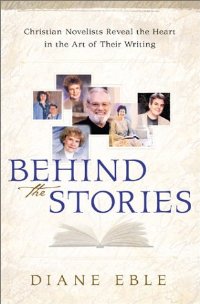
The next thing I noticed, I hit a bump in the road with my writing.  I got stuck, unhappy with what I was currently working on and questioning if I was even attempting to write in the genre that I could write best.  I wrote a post on this on October 18, and that post also mentioned a book my son found for me at our library book sale:  Behind the Stories by Diane Eble, which I have since finished reading.

That book got me to thinking about what my real desire for my writing is, and that is, to write stories that will be pleasing to my heavenly father, and that will encourage my readers.  Many of the writers in that book also mentioned praying about each and every piece of writing they write, before and during the writing process.  They also mentioned studying writing, which I had done a long time ago, quite extensively, but hadn’t done recently.

So, where am I at in my writing journey now?  Well, as I said, I finished reading Behind the Stories.  After that I read a Christian fiction book based on the book of Job, The Faithful One, and during this whole process, I began to ask God to guide my writing; to give me an idea and help me to create a story from the idea.  I was beginning to get a little concerned because I wasn’t getting any ideas.

But I decided to keep working on my writing journey by studying writing and to continue to pray and wait.  Well, I am currently reading another ebook I downloaded for Free because of a Bookbub notification, (which, by the way, I no longer check daily and am much more careful about what I download), Short Story:  From First Draft to Final Product by Michael Milton (now $2.99), and the past few days I have been contemplating the story I had begun a couple of months ago with the intention of making it my first novel, so I believe that I will be continuing to work on this project, but I also had two brand new ideas early this morning, which I quickly wrote down.

I believe that God stopped my writing because I was reading the wrong things and they were affecting my thoughts and emotions, and when I began seeking His guidance and studying the craft to refresh my skills, He gave my writing back.  God is faithful as we are faithful and I am excited that I now have some ideas to work with and feel more confident about my writing again, and I believe I am starting to figure out what genre I write best.

My Writers’ Group Update

This past Saturday, I attended my second Christian Writers’ Club meeting.  The guest speaker was Michele Chynoweth, who has written and published two novels and has a third one currently in publishing.


She explained that she writes modern Bible stories and that The Faithful One is based on the Book of Job and The Peace Maker is based on the story of Abigail.  I purchased both books and she autographed them for me.

She spoke about building character in our stories.  She talked about how important our characters are because they are what connects the reader to your story.  They make the reader feel.

Ms. Chynoweth encouraged us to allow the reader to make his/her own judgments rather than stating character traits directly, which, she explained, is part of the “show, don’t tell” mantra.

At the end she gave us a handout that includes 85 Character Development Questions for Writers.  I won’t post them here, but I will give you the acrostic she gave us:

Communication:  How does your character talk and sound?

History:  Where does your character come from?

Appearance:  What does your character look like?

Relationships:  What kind of family and friends does your character have?

Ambition:  What is your character’s passion, goals, needs?

Character defect:  Flaws make your character real.

Thoughts:  How does your character thnk?

Everyman-ness:  Your character needs to be relatable and believable.

Restrictions:  Your character has to deal with a challenge, weakness, handicap

Those are some of the things to consider when creating your characters in your writing.

I have never been fond of writing outlines, but Michele Chynoweth shared how important it is to be able to keep track of your characters so that you are consistent and don’t make errors.  She told of how she had once created a minor character and hadn’t made a note about him and one place had written about his dark hair and later said “he ran his hand through his sandy blonde hair”.  So, she said, even the little guys are important.  Therefore, I will at least keep a notebook about all of my characters, even if I don’t do an actual outline.

A New Direction in my Writing Journey

So, I have a short, short story started that I was planning on putting on this website, but I got stuck.  I also have a novel begun and I’m feeling a bit stuck.  I’m at a place where I just don’t know what genre I should write; which one I would write best.

Therefore, I have stopped writing for a little while, aside from my blog posts.  But, our local library had a huge book sale last weekend and the beginning of this week, and my sons and I were standing in one of the rooms near boxes of books, when I asked my oldest son if he had seen any books on writing.  He said, “No.”  Then, “Wait, what’s this?”  He handed me this book:

Image

I purchased the book and took it home and began to read it.  I am reading about some of my favorite Christian authors and how they began their writing journeys; authors like:  Janette Oke, Terri Blackstock, Francine Rivers, Randy Alcorn, Bodie Thoene and many more.  I love reading of their experiences, both struggles and successes.  I was surprised to read how some of them began with the New York publishing houses and were writing things that they are not proud of now, but how God led them to change that.

The most important message I am learning through reading this book is that, as a Christian author, the most important thing to do is to take your desire for writing to the Lord.  I have learned that I need to make my writing a matter of prayer and seek God’s direction for it.  If I give it up to Him, He will show me what he wants me to write and He will help me write it.   I began praying and asking God to show me what kind of story He wants me to write and for whom, and I believe He has already shown me my mission.  Now I continue to pray and wait believing that He will lead me and open the doors for me, as He knows I have had a desire to write fiction for a very long time, but now I have decided it to give it to Him.  I want to write stories that will be pleasing to Him and that will bring Him glory and, hopefully, allow people to see how much they need Him in their lives.

I do not plan to write anything until I finish reading this book, and I will continue to pray.  I will also continue to attend my Writers’ Group meetings.  If you’ve been reading here for a while, you’re aware that I have joined a writer’s group that meets monthly.  They began their season last month and that’s the meeting I attended.  You can read more about it on one of my previous posts.  Anyway, tomorrow is the next meeting, and I am so excited about this meeting.  Our guest speaker will be an author speaking on creating characters.  I look forward to hearing her and learning from her.

As I continue to pray and learn, I believe God is preparing me for His work in the fiction world and I can’t wait to see what He’s going to do through me.

My First Writers’ Group Experience

Some time ago, I went searching online for writer’s groups in my area.  I found two, but only one that I really felt would be a good fit for me.  They meet once a month but take the summers off.  They had their seasonal ‘kick-off’ this morning.  They had a guest speaker, Dean Drawbaugh, who spoke about the “Nine Qualities that Generate Book Sales”.  He spoke for almost two hours.  It was very informative and interesting.  Mr. Drawbaugh is a writer, publisher and consultant.

It was definitely a step out of my comfort zone to go to the group this morning, as I am an introvert and am uncomfortable going into a group situation not knowing if anyone I know will be there.  It was a good-size group, between 30 and 35 people, some of whom drove for an hour or more to get there.  I didn’t notice anyone really reaching out to people they didn’t already know, but it is easier to get to know people and learn more about them in the small groups, so I’m sure that’s where I’ll get to know more of the people.  I did speak with the leader of the small group for a little while afterwards to gather a little more information about the group and the sharing process.

Mr. Drawbaugh also said something that I had posted here in the past about writing.  I had shared a while ago that I have been seeing a lot of stuff about writers writing for themselves and the fact that this seems to have become more important to some writers than determining their audience and writing for a specific audience.  I mentioned that unless you know who you are writing for and write to that audience, you probably won’t sell many books.  Mr. Drawbaugh said the same thing.  He said that if a writer wants to write for him or herself, that’s fine, if he/she only wants to sell one copy.  He stressed the importance of knowing who your audience is, writing to that audience, and then preparing to market to that audience.  That’s how you become a successful writer who sells lots of copies of your book.  So, the real question is, do you want to achieve a level of success that enables you to earn some money or do you just want to write for your own pleasure?  I know I want to achieve a level of success and earn some money.   Writing is hard work, and though I love it, I would really like to be paid to do it.

This particular writer’s group frequently has guest speakers.  Most months, though, they divide into small groups and whoever wants to can share a piece of writing for feedback from the others in the group.  There is a limit on the number of words your piece may have, to enable everyone who wants to share to have the time to do so.  Then there is the ‘oreo cookie’ rule that says that those giving feedback must start with something positive, followed by tips and advice on things that they think should be changed or that could be done better (this is also done in a kind, polite manner), and then end with another positive.

I think this is a great way to get and give feedback.  It gives the writer helpful advice and offers them another point of view or perspective that can be helpful without tearing them and/or their writing apart in a manner that is simply defeating.  This type of writer’s group is very helpful and encouraging.  I think I’m going to like this group.  I plan to continue attending.

It has inspired me to write more, and I look forward to seeing what I can come up with and, maybe, share at the next meeting.

Many people speak of a writer’s life as solitary and in many ways it is, but it is so important to have a network or group that you can be a part of to prevent yourself from giving up or becoming depressed.  It’s always good to know that you’re not the only one struggling with a scene or a character or whatever.

Are you a member of a writer’s group?  Can’t find one in your area?  Maybe you could start one.