What I Need to Work On

Saturday, I attended my Writers’ Group.  We had another author as a guest speaker.  She writes Amish fiction as well as something called “Steam Punk” fiction.  I had never heard of Steam Punk fiction before but she even came dressed in Steam Punk apparel because upon leaving our Writers’ Group, she had a book signing for her Steam Punk fiction at a nearby historical railroad.

Her Amish fiction books are written under the name of Adina Senft and her Steam Punk books are written under the name of Shelley Adina.  She talked about several of her books and I was quite intrigued by the ones labeled as “Steam Punk” fiction.  I was disappointed that she didn’t have any books to sign and sell to our group due to time constraints, and probably because she needed what she brought for the book signing event.  Therefore, I will have to look for her books online.

She spoke to us about “World Building Through Your Character’s Eyes” (setting).  It was a wonderful workshop, though she went through it quite quickly because she normally takes three hours to teach it, and, for us, she had to squeeze it into one hour and forty minutes.  She had notes on an overhead, so I scribbled furiously in my notebook to be sure to catch the most important points, and, thankfully, she handed out a sheet with some of the more important points on it.  I have come to truly enjoy and value attending this writer’s group.  

I am learning so much, which brings me to the reason for the title of this post.  I stepped out of my comfort zone and shared two scenes of a story I am working on with a critique group, and they were very kind.  One lady blessed me by telling me all of the things she felt were very strong in my writing.  Those who told me my weakness, said, “point of view”.  I have been told this once before but this time it baffled me because I thought I was doing well with the point of view in this story.  In the past, with the story that I had been told had a confusing point of view, the person explaining it pointed it out to me and it was perfectly clear what I had done wrong.  I have been very careful not to do that with this story, and the thing they pointed out as the point of view issue seems strange to me because I am only sharing my main character’s thoughts and feelings.  The example they pointed to had a sentence or two of my main character’s thoughts before my secondary main character told her one of the stories of his life, and all she did was listen.

Do any of you have problems with point of view and how do you resolve it?  I will be researching point of view now to see if I can understand it better.  If you have any tips or advice on point of view, please leave a comment.  I would greatly appreciate it.

Helen Steiner Rice

I have loved Helen Steiner Rice’s poetry from the moment I discovered it.  It is always so encouraging and inspirational.  I wasn’t ready to share something of my own today, so I decided to share a Helen Steiner Rice poem.  I hope you will enjoy it and that it will encourage you today.

Storms Bring Out the Eagles But The Little Birds Take Cover

When the “storms of life” gather darkly ahead,
I think of these wonderful words I once read
And I say to myself as “threatening clouds” hover:
Don’t “fold up your wings” and “run for cover”,
But like the eagle “spread wide your wings”
and “soar far above” the trouble life brings,
For the eagle knows that the higher he flies,
The more tranquil and brighter become the skies…
And there is nothing in life God ever asks us to bear
That we can’t soar above “On The Wings Of A Prayer,”
And in looking back over the “storm you passed through”,
You’ll find you gained strength and new courage, too,
For in facing “life’s storms” with an eagles wings
You can fly far above earth’s small, petty things.

Helen Steiner Rice

I believe it is based on one of my favorite scriptures:  . . . “but those who hope in the Lord will renew their strength.  They will soar on wings like eagles, they will run and not grow weary, they will walk and not be faint.”   — Isaiah 40:31

Are Writing Exercises Helpful?

I used to think that using writing prompts or exercises was like plagiarizing or cheating because you begin with someone else’s idea and just build on it.  But I have recently found that many writers use writing practice as warm-up or as a help to get ideas for a story flowing.  Recently, I have begun to read:

In this book, Josip Novakovich offers many writing exercises and he suggests that you connect them, to take your best shots and connect them in a collage or use them as seeds for fiction.  The exercises vary from very narrow to very broad and they build upon each other.  He explains that these exercises can be used to develop a story, to grow a story or to support a story in progress.  I am finding this book quite interesting and helpful.

Another great source for writing exercises is The Write Practice website.  Not only does this site offer writing practice prompts and ideas, but it also offers a wealth of writing advice.  You can also simply google “writing practice” or “writing prompts”, and their are other books that offer writing practice and prompts as well.

As I am still kind of stuck in a bit of a writing slump, trying to decide what genre to write and building a good story idea, I am finding the writing practices helpful because between them and this blog, at least I am writing.  I may post some of my writing practices here if I feel they are worth sharing.

A Great Resource

I have just discovered a Christian author that I have never heard of before.  I was looking on Amazon.com for books on the writing craft and discovered K.M. Weiland.  She has two books out on the writing craft that I will be purchasing as soon as possible.  She also has a blog that she writes to help other writers:  Helping Writers Become Authors.  She has a current opportunity to download a PDF entitled “Crafting Unforgettable Characters” if you sign up to follow her blog and receive her e-newsletter.  I signed up and downloaded and printed the PDF and can’t wait to dig into it.

K.M. Weiland writes historical and speculative fiction.  She has several books published already, including a couple of short stories, and she has two books in the works.  On her blog, she also offers webinars.

Check out her website, her facebook and twitter pages.  You won’t be disappointed.

Do I Really Need an Outline of Some Sort?

I have always been the kind of writer who simply sits down and writes.  I have a story idea and I simply write it.  Of course, like any other writer, I then have to edit and do rewrites until it is as good as I believe it can possibly be.

However, as I have been attending a writers’ group and reading some books on writing, I have given this a bit more thought, and now see at least one good reason for some type of outline.  I believe I may have mentioned in my post about our last writers’ group that the guest speaker mentioned that she had created a minor character for one of her stories and hadn’t written down her information about that character, and when the story went to the editor, the editor contacted her and explained that she gave two different physical descriptions of that character in two different scenes.  It is easy to see how that can happen, so I would say that is a very good reason to have at least some kind of outline of your characters.  I also believe there are other good reasons for having an outline.

I will admit, though, that I have never enjoyed creating outlines.  I find them a bit too structured and when I try to use them, I feel my creativity drain away.  Can anyone relate?

Then I read Short Story:  From First Draft to Final Product by Michael Milton (I know I’ve mentioned this ebook before).  In this helpful, little book, I found an outline that encourages creativity instead of stifling it, because you use it while brainstorming!  It is called the “Herringbone” diagram and Michael Milton credited it to David Mitchell.  It was explained as drawing a vertical line on a piece of paper.  This is the “spine”.  Then insert “bones” off this spine which represent the chapters.  Coming off those bones are smaller bones which represent scenes within those chapters, and coming from those can be bits of dialogue, sentences or ideas that will be part of these scenes.  (This is like advanced brainstorming.)  With a few ideas already there for what needs to happen in each section, it should be easy to write during writing time.  I’m looking forward to giving this type of outline a try.

What type of outline do you use and do you find it helpful?

Do You Want to be a Quality Writer?

What do I mean by the title of this post?  Well, I have been reading some physical books and some ebooks, and it got me thinking.

You see, in addition to being a writer, I am also a photographer, although I choose to keep this as more of a hobby.  I have found since digital photography became the norm, that ANYONE can take a photograph and make it a good photograph, either by deleting and re-shooting, or by using one of the many editing programs that can completely transform a photograph.  I find this a bit frustrating because people who know nothing about photography or what makes up a good photograph are taking pictures and being told they’re wonderful.  The appreciation for the person with the true photographer’s eye, photography knowledge and experience simply doesn’t truly exist anymore.

However, I still believe that a true photographer can take a great picture the first time and not need to do much, if any, editing to deliver a wonderful product.  A true photographer doesn’t just have a photographer’s eye, photography knowledge and experience, but they also have patience — the patience to sit and wait for the shot, and they know when to hit the shutter release button when they see what they have been waiting for.

All that said, let’s now look at writing in a similar manner.  You see, as I have been reading, I can tell you that, yes, I have noted one or two typographical errors in some physical books.  However, I see LOTS of typographical and grammatical errors in MANY ebooks, as well as poorer quality writing.  This has given me over to much thought about the quality of writing.  I have read that there are more writers in this computer technology age than ever before.  My question is, but are they worth reading?

You see, like the thought that ANYONE can take a good photograph with today’s technology, I think it is comparable to ANYONE who THINKS he/she can write, can produce a book.  Self-publishing has become a more utilized venue, and ebooks can be created by anyone with some basic computer knowledge.

I believe to be a quality writer, you must be an avid reader who reads good quality stories that are the type of stories that you want to write.  I also believe you must study the craft of writing, which also has more options than in the past.  Now you don’t have to go to college or take a correspondence course, you can take a course on the computer in your own home, and you can join a writers’ group.  I believe it is important to allow other writers to read your work and offer advice, and I believe it is important to seriously consider the reader(s)’ comments and advice.  We should not be overly sensitive about our writing to a point that we cannot consider improvement.

I believe that reading the classics also helps to improve your writing skills.  After all, would theses stories be classics, being read a hundred or more years after being written, if they weren’t good quality?

Finally, I would like to suggest that if you want to be a good quality writer, don’t rush into self-publishing or creating an ebook.  Be sure to re-read and revise/edit your story more than once before you consider it finished.  When you feel that your story is finished, put it away for three to six months, and don’t look at it at all during that time.  During that time, continue to write other things.  Then, after three to six months, take that story out again, and you will see it with fresh eyes.  You may find some more need for editing or even some changes that would make the story even better.  (This tip of letting your story sit for months and then reading it with fresh eyes, was something I read in Short Story:  From First Draft to Final Product by Michael Milton), and I think it’s a very good tip.

Think about it, do you want to produce good quality writing or do you just want to publish your writing?  Having the patience to put in the time for revisions and waiting and reading again later could mean the difference between a dozen or even a couple of hundred people reading your book today, or tens of thousands of people reading your classic story a hundred years from now.

Can What We Read Hinder Our Own Writing?

I am well aware that what we read has an affect on us, whether good or bad.  I am also well aware that, because of this, it is important to be careful of what I read, and I have recently learned something else about what I read:

What I read affects my thoughts and ideas and can hinder my own writing.  You see, I was told about Bookbub several months ago.  For those of you who may not know what Bookbub is, it is a service that sends me a daily email with the daily ebook specials (under $10, and quite a few Free) available at Amazon and another online book seller or two, for that given day.  So, I downloaded a lot of the Free choices that sounded like the kinds of stories I like to read and would like to write.

What’s wrong with that, you may ask.  Well, here’s what’s wrong with that, at least for me.  I read several of the books and found some of them quite good, as far as a story line goes.  But, I also found that many of them had language included that I do not use nor do I prefer to read or hear, if I can help it.  A couple of them also had sexually explicit material, which I also prefer not to read.

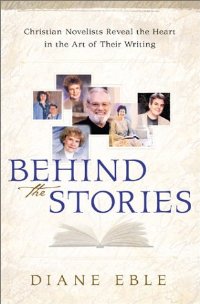
The next thing I noticed, I hit a bump in the road with my writing.  I got stuck, unhappy with what I was currently working on and questioning if I was even attempting to write in the genre that I could write best.  I wrote a post on this on October 18, and that post also mentioned a book my son found for me at our library book sale:  Behind the Stories by Diane Eble, which I have since finished reading.

That book got me to thinking about what my real desire for my writing is, and that is, to write stories that will be pleasing to my heavenly father, and that will encourage my readers.  Many of the writers in that book also mentioned praying about each and every piece of writing they write, before and during the writing process.  They also mentioned studying writing, which I had done a long time ago, quite extensively, but hadn’t done recently.

So, where am I at in my writing journey now?  Well, as I said, I finished reading Behind the Stories.  After that I read a Christian fiction book based on the book of Job, The Faithful One, and during this whole process, I began to ask God to guide my writing; to give me an idea and help me to create a story from the idea.  I was beginning to get a little concerned because I wasn’t getting any ideas.

But I decided to keep working on my writing journey by studying writing and to continue to pray and wait.  Well, I am currently reading another ebook I downloaded for Free because of a Bookbub notification, (which, by the way, I no longer check daily and am much more careful about what I download), Short Story:  From First Draft to Final Product by Michael Milton (now $2.99), and the past few days I have been contemplating the story I had begun a couple of months ago with the intention of making it my first novel, so I believe that I will be continuing to work on this project, but I also had two brand new ideas early this morning, which I quickly wrote down.

I believe that God stopped my writing because I was reading the wrong things and they were affecting my thoughts and emotions, and when I began seeking His guidance and studying the craft to refresh my skills, He gave my writing back.  God is faithful as we are faithful and I am excited that I now have some ideas to work with and feel more confident about my writing again, and I believe I am starting to figure out what genre I write best.

My Writers’ Group Update

This past Saturday, I attended my second Christian Writers’ Club meeting.  The guest speaker was Michele Chynoweth, who has written and published two novels and has a third one currently in publishing.


She explained that she writes modern Bible stories and that The Faithful One is based on the Book of Job and The Peace Maker is based on the story of Abigail.  I purchased both books and she autographed them for me.

She spoke about building character in our stories.  She talked about how important our characters are because they are what connects the reader to your story.  They make the reader feel.

Ms. Chynoweth encouraged us to allow the reader to make his/her own judgments rather than stating character traits directly, which, she explained, is part of the “show, don’t tell” mantra.

At the end she gave us a handout that includes 85 Character Development Questions for Writers.  I won’t post them here, but I will give you the acrostic she gave us:

Communication:  How does your character talk and sound?

History:  Where does your character come from?

Appearance:  What does your character look like?

Relationships:  What kind of family and friends does your character have?

Ambition:  What is your character’s passion, goals, needs?

Character defect:  Flaws make your character real.

Thoughts:  How does your character thnk?

Everyman-ness:  Your character needs to be relatable and believable.

Restrictions:  Your character has to deal with a challenge, weakness, handicap

Those are some of the things to consider when creating your characters in your writing.

I have never been fond of writing outlines, but Michele Chynoweth shared how important it is to be able to keep track of your characters so that you are consistent and don’t make errors.  She told of how she had once created a minor character and hadn’t made a note about him and one place had written about his dark hair and later said “he ran his hand through his sandy blonde hair”.  So, she said, even the little guys are important.  Therefore, I will at least keep a notebook about all of my characters, even if I don’t do an actual outline.

A New Direction in my Writing Journey

So, I have a short, short story started that I was planning on putting on this website, but I got stuck.  I also have a novel begun and I’m feeling a bit stuck.  I’m at a place where I just don’t know what genre I should write; which one I would write best.

Therefore, I have stopped writing for a little while, aside from my blog posts.  But, our local library had a huge book sale last weekend and the beginning of this week, and my sons and I were standing in one of the rooms near boxes of books, when I asked my oldest son if he had seen any books on writing.  He said, “No.”  Then, “Wait, what’s this?”  He handed me this book:

Image

I purchased the book and took it home and began to read it.  I am reading about some of my favorite Christian authors and how they began their writing journeys; authors like:  Janette Oke, Terri Blackstock, Francine Rivers, Randy Alcorn, Bodie Thoene and many more.  I love reading of their experiences, both struggles and successes.  I was surprised to read how some of them began with the New York publishing houses and were writing things that they are not proud of now, but how God led them to change that.

The most important message I am learning through reading this book is that, as a Christian author, the most important thing to do is to take your desire for writing to the Lord.  I have learned that I need to make my writing a matter of prayer and seek God’s direction for it.  If I give it up to Him, He will show me what he wants me to write and He will help me write it.   I began praying and asking God to show me what kind of story He wants me to write and for whom, and I believe He has already shown me my mission.  Now I continue to pray and wait believing that He will lead me and open the doors for me, as He knows I have had a desire to write fiction for a very long time, but now I have decided it to give it to Him.  I want to write stories that will be pleasing to Him and that will bring Him glory and, hopefully, allow people to see how much they need Him in their lives.

I do not plan to write anything until I finish reading this book, and I will continue to pray.  I will also continue to attend my Writers’ Group meetings.  If you’ve been reading here for a while, you’re aware that I have joined a writer’s group that meets monthly.  They began their season last month and that’s the meeting I attended.  You can read more about it on one of my previous posts.  Anyway, tomorrow is the next meeting, and I am so excited about this meeting.  Our guest speaker will be an author speaking on creating characters.  I look forward to hearing her and learning from her.

As I continue to pray and learn, I believe God is preparing me for His work in the fiction world and I can’t wait to see what He’s going to do through me.

Liebster Award

Image

The Bewildered 20-Something Writer has nominated me for the Liebster Award!  What is the Liebster Award, you may be wondering?  It’s an award for smaller blogs that other bloggers think are pretty great — thank you, Bewildered.  According to The Bewildered 20-Something Writer, Liebster means “dearest” in English.

Blogs are nominated for the award by other bloggers in hopes the award will draw more traffic to the nominated blog, and that it would get more views.  If a blogger accepts the nomination for the Liebster Award, he/she answers ten questions posed by the nominating blogger, and then nominates other blogs for the award in the same way.

I have seen that I am supposed to nominate ten blogs, but as I am fairly new to WordPress and haven’t really visited many blogs and most of the blogs I follow have a large following, I only have two blogs to nominate:

Speculations Impressed

The Norman Crane

Here are my questions for my nominees:

1.  Who/What is your favorite storybook character?

2.  Why do you write a blog?

3.  If you could interview any famous/notorious person, past or present, whom would it be and why?

4.  If you could live anywhere in the world, where would it be?

5.  What is your favorite ice cream flavor?

6.  What cartoon character are you most like?

7,  What do you like to do when you’re home alone?

8.  Have you ever danced in the rain?

9.  What advice would you give your thirteen-year-old self?

10.  What one thing do you most want to accomplish before your life is through?

Now, I will attempt to give my best answers to the very thought-provoking questions The Bewildered 20-Something Writer asked me:

What inspired you to start writing/blogging?

I have been writing stories since I was in the fifth grade simply because I enjoyed writing.

My seventh grade English teacher encouraged me to keep writing.

This is actually my third blog.  I was inspired to begin my first blog (which no longer exists) because some ladies at the church I am a part of introduced me to blogging.  This blog was a place I shared about what we as a family were doing and my thoughts and views on different topics.

Then I created a homeschool blog to post things my boys and I were doing in our homeschool and to offer tips and advice to other homeschool parents.  This blog is still in existence at here, although I rarely post on it anymore.

Finally, I began this blog because I was inspired by Jeff Goins, Writer, when I read an e-book he had written about writing that inspired me to start writing again, and to try to do so regularly.

If you could shrink any animal – real or mythical – so that it was pocket sized, what animal would you shrink and keep as a pet?

I am an animal lover, so this question was difficult, but I think I would have to say an elephant.

Name three guilty pleasure books and/or movies that you’re sorry you’re not sorry you like?

I would have to say the book The Help by Kathryn Stockett, the movie P.S. I Love You, and the book A Knight in Shining Armor by Jude Deveraux.

If you could change your name to anything, what would you change it to?

I suppose it would be Isabella.

What inspires you creatively, i.e. what gets your creative juices pumping again when you’re in a bit of a slump?

Going to the mall and simply people watching and catching bits and pieces of the conversations that go on around me.

If you knew you only had one hour before the zombie apocalypse, what would you do?

I would snuggle with my husband and my three boys and read the Bible,

talk about our faith and let each of them know how very much they

mean to me, and spend some time in prayer.

Name the weirdest/funniest/coolest/most memorable etc. dream you’ve had.

The most memorable dream I have had was a recurring nightmare I had as

a child of about ten.  I used to dream that a huge giant had captured me,

my family and my closest friends, and he had this giant sized iron (the kind

they used to use to press pictures/decals onto t-shirts).  The giant would line

everyone up and make me watch as he pressed all of my family and friends

in the iron.

What advice would you give your six year old self?

Don’t watch T.V.

What are the five things that make you the happiest?

1.  Spending time with my husband and three sons.

2.  Sundays

3.  Holiday family get-togethers

4.  Trying new recipes in the kitchen (cooking and/or baking)

5.  Reading and writing

Star Wars or Star Trek?

Star Wars