Timeless Tuesday — History Related to My Novel — Orphanages in St. Louis, Missouri in the 1800s

Missouri Baptist Children’s Home, St. Louis, Missouri taken from (https://www.mbch.org/content/who-we-are/our-history/4)

St. Joseph’s Home for Boys (1835-1988) is a former Roman Catholic orphan asylum administered by the Sisters of St. Joseph of Carondelet. (This photo and information taken from Facebook — https://www.facebook.com/Saint-Josephs-Home-for-Boys-1835-1988-St-Louis-MO-435351459833507/
Above are a drawing of an orphanage that was first opened on April 1, 1886 in St. Louis, Missouri and a photo of St. Joseph’s Home for Boys.
There was also St. Vincent Home for Children which was founded in 1850 following a cholera epidemic and a fire that left many children orphaned in St. Louis, Missouri. Because many Diocesan orphanages were already crowded at the time, an appeal was made to the German Catholic community. The German Catholic community responded by constructing the St. Vincent Home for Children in 1850. Five sisters of St. Joseph Carondelet took charge of the new home in 1851 and the first orphan arrived on July 25, 1851.
(I was unable to find out if there is any connection between St. Vincent Home for Children and the St. Joseph Home for Boys, which was also run by Sisters of St. Joseph of Carondelet.)
I share this information with you because my main character ended up in a Boy’s Home in St. Louis, Missouri when he was 14 years old, and he remained there until he was 18 years old, when he went out on his own. The Boy’s Home isn’t mentioned in my story in great detail, or even more than two or three times, but it is a part of my main character’s back story. I imagine the Boy’s Home, where my main character lived for four years, to be similar to the St. Joseph Boy’s Home. I do specify in my story, that when my character was there, it as a Boy’s Home run by Catholic Sisters.
Both the Missouri Baptist Children’s Home and the St. Vincent Home for Children are still in existence in Missouri today.
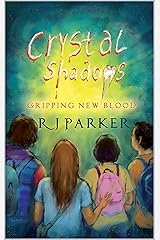
Crystal Shadows: Gripping New Blood by R. J. Parker

About the Book:
Crystal Shadows: Gripping New Blood by R. J. Parker is a middle grade fantasy story. Sarah Field lives alone with her father, until she and her friends make a shocking discovery in Sarah’s attic — her grandfather, whom she thought was dead! He reveals an amulet — the Tellum Deos. He wants to know if Sarah can give it life so that they can use it to fight the powers of darkness.
My Review:
R. J. Parker did an excellent job creating interesting middle grade characters. Sarah and her friends are fun to read about, even though sometimes the things they say are quite random and don’t seem to fit what is going on in the story. Their curiosity helps them to discover Sarah’s grandfather, but also gets them into some interesting predicaments. The four friends have a close relationship.
Sarah also has a close relationship with her father, until she and her friends discover her grandfather. This causes her father to come a bit unhinged and creates stress, tension, and conflict between Sarah and her father.
The characters and the story line kept me turning pages. I kept waiting to see what the powers of darkness were going to unleash and what Sarah and her friends might have to fight against.
There were some disappointing things in the book: first, R. J. Parker used a lot of pronouns, especially when characters spoke, and sometimes the pronouns were mixed up or it was confusing as to which character the pronoun was being used for; second, the powers of darkness only unleashed one problem near the end of the book, but Sarah and her friends never used the Tellum Deos against it and the ending didn’t feel complete and didn’t offer a resolution to any part of the story. Therefore, it seems like this may be the first book of a series, though that isn’t mentioned anywhere; and finally, there are one or two characters introduced as “Sarah’s friends” at the end of the book that were never part of the story up until that point.
Despite these disappointments, I must say that I enjoyed the story and it kept me turning pages. I finished this book in just four days. The characters are definitely what kept me turning pages, even though the story line was also intriguing. I don’t think most adults would enjoy this story, but I would highly recommend it for middle grade children and even some YA. I hope that R. J. Parker does write, at least, a sequel to this book. I would like to read more about Sarah and her friends and actually see them use the Tellum Deos against the powers of darkness.
It was a difficult decision for me to come to a star rating for this book. But, based on how well it kept my attention, how quickly I read through it, and how much I liked the characters, I have decided to give it four stars.
Special Saturday Post: The Falcon and the Stag by C.J.R. Isley
![The Falcon and The Stag: A Tale of Alamore by [C. J. R. Isely]](https://m.media-amazon.com/images/I/51IzBMtjCBL.jpg)
The Falcon and the Stag by C.J.R. Isley is a short story that introduces her “William of Alamore” series. It is a story of kingdoms and knights, and two brothers, the oldest who had been prepared to take the throne, and the youngest who wanted it.
This short story is filled with tension, suspense, conspiracy, and sibling rivalry. C.J.R. Isley does a fine job introducing the characters and showing their personalities and character, drawing the reader into the story and encouraging them to choose sides.
C.J.R. Isley captures and holds the reader’s attention from the first to last page, writing strong dialogue and tense scenes of confrontation and sword-fighting. C.J.R. even manages to throw in an unexpected twist or two.
This story is acceptable for young adults and adults. It may also be acceptable for middle grade readers, though there is some violence — nothing too graphic.
This short story is well worth the read, but be warned — after reading it, you’ll want to pick up the first book in the series, Ranger of Kings, which is exactly what I plan to do.
I give The Falcon and the Stag by C.J.R. Isley 5 stars.
Flash Fiction Friday: The Love of a Shepherd

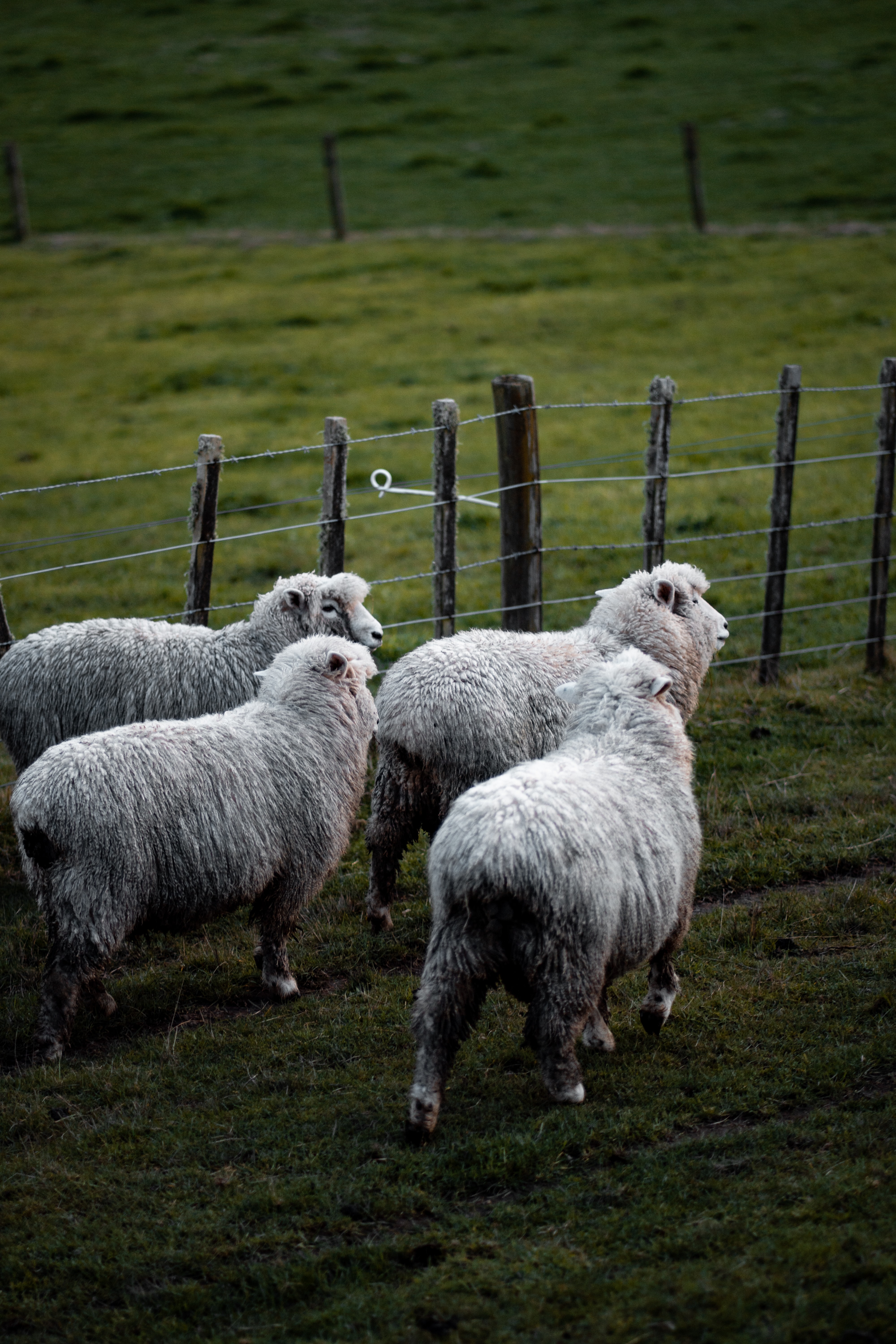
Photo by Douglas Bagg on Unsplash
The Love of a Shepherd
by Kelly F. Barr
A knock at the door startled Stella. She wasn’t expecting anyone. She laid her book on the table next to her and rose from her blue wing-back chair. She stepped from the living room into the short hallway that led to her front door. She peeked through the long narrow side window.
Surprised to find a tall man with jet black hair, piercing blue eyes, and a five o’clock shadow standing on her porch, she paused. As she considered whether or not to open the door, the man turned to look toward the front pasture and ran a hand through the dark waves crowning his head, then knocked louder.
Curious, she opened the door a few inches. “May I help you?”
A look of relief washed over the man’s face, and he said, “Oh, thank goodness someone’s home. One of your sheep has it’s head stuck between a couple of the wires in your fence down by the road. It is bleating quite loudly. I wasn’t sure if sheep bite or not, so I thought I’d better let someone know.”
“I’m sure it will be fine. I’m sure if it got its head through the fence one way, it can get it back the other way.”
“No, ma’am. I don’t think so. I’m not even sure how it got its head through in the first place. The wires don’t look far enough apart for its head to fit. Won’t you please check on it? I’d hate for it to get hurt.”
Stella couldn’t help but smile. “Well, thank you for letting me know. I’ll be right out to check on the sheep. You can just climb back into your car and drive on outta here.”
The man looked at her and hesitated for a minute. Then he turned and left the porch.
Stella waited until she heard a car start, then she stepped out onto her porch and looked down her long gravel drive. There was a silver convertible Ford Mustang at the end of the lane. She started to walk down the driveway. The closer she got to the pasture, the more she slowed her pace. That Mustang wasn’t moving.
Was this man up to something or was he just really that concerned over her sheep? She decided to enter the pasture’s gate and walk through the pasture to the sheep. That way, if this guy was up to something, the fence would be separating them.
As she approached the pasture’s fence line near the road, she could hear the distressed bleat of a sheep. The other sheep seemed uneasy and walked around one another, bleating from time to time as well.
When Stella reached the fence, sure enough, there was Lulabelle, the oldest ewe of her flock with her head stuck between two wires in the fence. Stella spoke to Lulabelle before getting too close to avoid startling the old sheep even more. “Oh Lulabelle, what have you done? Calm down. Everything’s going to be all right now. I’m here. I’ll get you out of there.” She continued talking to the sheep as she placed a hand on its back and moved to the fence. Stella was able to pull the wires apart, but had to untangle a wire from Lulabelle’s wool. As soon as Stella extracted the wire from the wool, Lulabelle pulled her head free. The old ewe ran to the flock letting out a much happier bleat.
Stella noticed that the wire she had taken out of the old ewe’s wool had come loose from the fencepost. That is what had enabled Lulabelle to get her head through. However, when she had tried to pull her head back out, the end of the wire had tangled in her wool and drawn tighter, creating a trap.
Stella grabbed the loose wire, moved it to its proper place, and began winding it tightly around the fencepost to prevent this from happening again.
“That sheep seems genuinely happy to be free.”
The voice startled Stella and the wire end slipped in her hand and cut a small slice in her index finger. It began to bleed. She looked up at the man, now standing outside the fence, the car door of his convertible Mustang open behind him. “You still here? I thought I said you should go.”
“I’m sorry. I just wanted to see the sheep freed. I don’t know much about sheep.” He looked at her through squinted eyes as the sun shone down on him.
Stella finished fastening the wire, then pulling a handkerchief from her pocket, wrapped her finger to stop the bleeding. She moved toward the stranger. She paused about four feet inside the fence.
“Sheep are stupid animals. That’s why, in the old days, there were shepherds who worked moving the flocks from grazing site to grazing site. The sheep came to know the shepherd’s voice and learned they could trust the shepherd. The shepherd not only herded the sheep to provide food, he protected the sheep from predators, and he loved the sheep. He made sure each and every sheep in his flock had a name, and he knew each one by name.”
“I heard you call the one that was stuck, Lulabelle. You named all your sheep too, didn’t you?”
“That’s right.”
“But how can you tell them apart? They all look the same to me.”
“When you raise sheep, you have to spend a lot of time with them. Sheep still need shepherds today, and when you spend time with them and love them, it’s easy to tell them apart. Thanks for letting me know about Lulabelle.”
“You’re welcome, and thank you for the sheep lesson.”
Stella smiled and nodded to the stranger, then walked up through the pasture toward her house, the sheep following her as she went.
Thursday’s Thoughts, Questions, and Comments About Writing

Today I have chosen to address the topic of “head hopping”. Some of you may ask, “What is head hopping?”
Head hopping is when a writer jumps from one head to another (switches from one character’s POV to another) without warning. (POV is Point of View). This can be quite confusing to your reader. It can also jolt your reader right out of your story. It is simply that the writer tells or shows us what is going on inside their main character’s head, then in the next sentence, next paragraph, or next scene tells or shows us what is going on in another character’s head without warning.
For instance: Robert took Janie’s hand as they strolled along the beach. When his fingers entwined hers, an electrical current shot through his fingers and up his arm. He wondered if she felt it too. Janie nearly pulled her fingers from Robert’s at the strength of the jolt his touch sent through her. She studied his face for a clue that he had felt it too.
Notice that in the first three sentences, Robert is the character reaching out to take Janie’s hand and feeling an electrical current shoot through his fingers. Then he wonders if she felt it too. In the next two sentences, Janie is the character considering pulling her fingers from Robert’s because of the jolt she felt at his touch. Then she studies his face to look for a sign that he might have felt something as well.
Do you see how we jumped from Robert’s head (POV) to Janie’s head (POV) in the same paragraph, just a few sentences apart? If Robert is the main character and we are inside his head in this paragraph or scene, we should be shown his thoughts and feelings. However, Janie is probably a second main character as she is most likely Robert’s love interest. But Robert cannot know what she thinks or feels unless she talks about her thoughts or feelings or exhibits a physical reaction.
Some of you may not see a problem with the example paragraph. Maybe it doesn’t confuse you or pull you from the story. However, for most readers, reading an entire book written this way gets tiresome and confusing. This kind of writing doesn’t allow your reader to get deep into one character’s head–thoughts and feelings–to fully be drawn in and engaged with the story.
Does this mean you can only have one point of view character in a story to avoid confusing your reader or pulling them out of your story? Certainly not. You just have to learn, and put into practice, how to move smoothly from one character’s head to another’s to avoid the confusion and the possibility of pulling the reader out of the story.
How do you avoid this problem? Be aware of whose point of view you are writing in –which character’s thoughts and feelings is your reader experiencing? While telling and showing your main character’s thoughts and feelings, remain in that character’s head, sharing these things until a scene or chapter comes to an end. The best and smoothest ways to change to another character’s thoughts and feelings is to wait to begin a new scene, then add a page break (use a symbol such as an asterisk three to five times in the center of the page with a page space before and after it), or wait until you begin a new chapter. These two places make a natural place to change your character’s POV, and by placing the page break and symbol or changing the chapter, your reader will know something is going to change and will be ready for it–expecting it. This will prevent confusing and jolting your reader out of the story.
One more thing I want to point out is that a character’s actions and physical reactions can be written in the same paragraph or scene as the main character’s as long as the main character is with the character who is acting or physically reacting. The main character can see the other character’s actions and physical reactions as long as they are with that other character. The problem with thoughts and feelings is that your main character is not a mind reader and cannot possibly know what the other character is thinking or feeling.
I hope you find this article helpful along your writing journey. If you have any questions, comments or thoughts you’d like to share, please leave them in the comments section below. I will always respond.

Wordless Wednesday
Timeless Tuesday: History Related to my Novel

Photo acquired from Get Archive, LLC (public domain photos)
The above photo is a photo of the Patee (pronounced Pay-tee) House Hotel. It was a four-story, red brick building built in 1858 on the corner of South Twelfth and Penn Streets in St. Joseph, Missouri. It is believed to be the first hotel west of the Mississippi River.
In 1860, when the Pony Express began, the Patee House was the headquarters of the Pony Express.
The Patee House was also said to provide the last taste of civilization for pioneers and prospectors who were bound for the western frontier.
The hotel drew a lot of attention due to its size, and despite its elaborate appearance, its top floor was home to a sanitarium for epileptics.
Though the Patee House was the Pony Express Headquarters, the only Pony Express rider I have going in and out of the Patee House is my main character. I also don’t have any of the owners come in or out of the hotel, and I do not mention anything about the top floor. I only mention the ground floor and the second floor, and eveything about the appearance of the interior and what happens in the hotel are all fictionalized and strictly from my imagination.
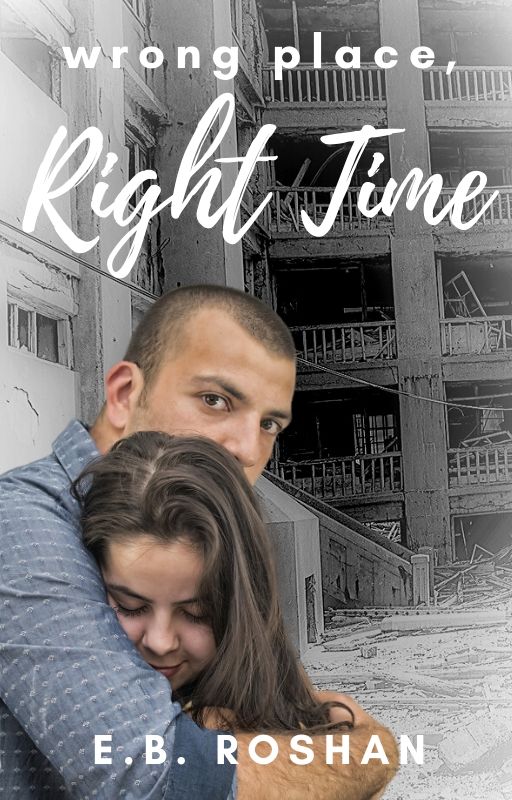
Wrong Place, Right Time by E. B. Roshan

About the Book:
Anna Belko is a young woman living in the city of Dor. There is unrest in the city. Anna meets Boris Merkovich at a cafe called Oksana’s, when she stops for a cup of tea. A relative of Boris’s was killed but he doesn’t have time to grieve because he has to run the cafe. He nearly spills a pot of tea in Anna’s lap, and she prays for him.
Boris is deeply touched by Anna’s prayer for him and so begins a love neither of them expected.
However, stuck in a city filled with hatred, it soon becomes clear that the hatred isn’t just “outside” and Boris and Anna’s relationship is threatened.
The story, though centered around Anna and Boris, includes several other characters, including Anna’s parents and one of her brothers, whom she is close to. The story is filled with danger and troubles between the Sevian people and the Tur people.
As the violence escalates near their home, Anna’s parents decide to move to Dovni where things are not so volatile. Anna remains behind with her brother.
My Review:
The plot kept me turning pages. The characters captured and held my attention. The characters were realistic, and I cared about them and what happened to them. My heart ached for Anna and Boris as they struggled with their environment and their feelings for one another.
E.B. Roshan did an excellent job showing the difficulties of living in an area where danger and hatred are a part of everyday life. Not only did E.B. Roshan clearly show the dangers, Roshan did an excellent job expressing the thoughts and feelings of the people stuck amidst the struggles.
The story was very well written. Though it was a story about hatred and violence, the violence was not overly descriptive or gory. It did not need to be to touch the reader’s heart and help the reader understand the setting and what was happening. I also liked how Roshan showed that hatred is a choice and no one has to allow it to consume them.
E.B. Roshan wrapped up the ending quite nicely, but even so, I was sad to finish the last page and say goodbye to these characters.
I really enjoyed this story and highly recommend it to anyone who enjoys a well written story filled with struggles and different types of loving relationships.
I give this story 5 stars.
The Chosen Ones by Lisa Luciano

Have you ever watched the Figure Skating competitions of the Olympics? Years ago, I remember watching the likes of Scott Hamilton, Dorothy Hamill, Brian Boitano, Katarina Witt, Elvis Stojko, Viktor Petrenko, Oksana Baiul, and Kristi Yamaguchi. And who can forget all the drama between Nancy Kerrigan and Tonya Harding? These skaters and the Kerrigan — Harding drama had me riveted to the screen.
Now, let me ask you another question: how many times did you think the judges didn’t give the skater, you thought gave the top performance, high enough scores? I know I often disagreed with scores. However, I never suspected that there was a story behind the scores.
That’s what The Chosen Ones by Lisa Luciano is about. Lisa was a sports reporter who covered Figure Skating for “The New York Times” and “International Figure Skating Magazine”. She includes four of the Figure Skating Articles she wrote for the New York Times near the end of this book.
No, this story isn’t about any of the ice skaters you may have followed on their Olympic journey. The characters and their stories in The Chosen Ones are fictional, but some of the scandalous, sometimes desperate, behaviors and corruption among judges’ scores are based on facts discovered by Lisa while she covered Figure Skating in her journalism days.
The story has a lot of characters, which, in the beginning, was a bit difficult to follow, especially as Ms. Luciano does a lot of head-hopping without page breaks, frequently jumping from one character’s head to another’s from one paragraph to the next. Therefore, it was sometimes difficult to determine whose head I was in sometimes as I was reading, and I had to back track to figure it out. However, in order to really give the reader accuracy and the actual feel of figure skating competition, I honestly don’t know how Ms. Luciano could have written a story as accurate and compelling as The Chosen Ones, with fewer characters.
Also, as I continued reading, I became accustomed to her head-hopping writing style and became very involved in the lives of the characters.
The story was full of drama and conflict. I loved some characters and disliked others, but every one of them kept me turning the pages to see where this was all going and who was going to be a winner, who would be a loser, and who would lose his life before the end of the Olympics.
The only warning I have to issue, because those of you who follow my book reviews know that I do not read books with sexually explicit scenes, is that this book has a few of such scenes, which I was not aware of when I agreed to review this book.
However, if you can skip or overlook such scenes, and have a love or fascination with Figure Skating, you will not be disappointed with this book.
Because of the trouble I had following the characters in the beginning chapters of the book and because I was disappointed to find the unexpected sexual scenes in this story, I give this story four stars.
Reviewer’s Note: I was given a free copy of this book for my honest review.